The world of frameworks is diverse—and sometimes confusing. ITIL®, PRINCE2®, Scrum, DevOps, SAFe®, COBIT®, TOGAF… The list is long, and the promises are big. But which framework is right for your company? There’s no simple answer—but here’s a little guidance.
What exactly is a framework?
A framework is not a rigid set of rules, but rather a structured approach that brings together proven methods and principles. It provides guidance, reduces complexity, and helps improve efficiency, quality, and transparency. Whether for IT service management, project management, agility, or corporate governance—there are suitable frameworks for nearly every challenge.
An Overview of the Most Common Applications
- Service Management:
ITIL® helps manage IT services in a user-centered and sustainable way. - Project Management:
PRINCE2® brings structure to both traditional and agile projects. - Agile Work Methods:
Scrum, SAFe® or Kanban promote flexibility and self-organization. - IT Governance & Control:
COBIT® addresses governance, compliance, and risk management. - Culture & Collaboration:
DevOps stands for better collaboration, automation, and continuous delivery.
"Either-or" is a thing of the past
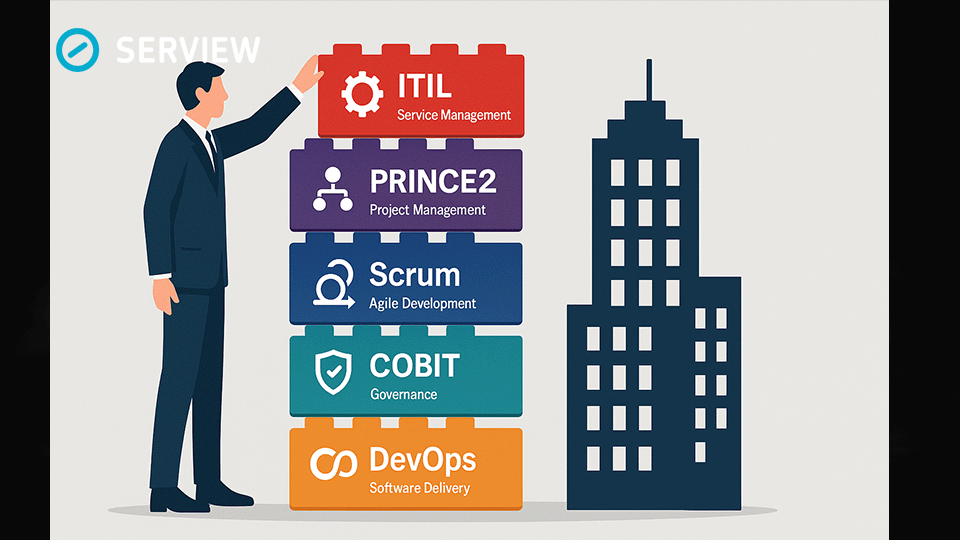
Frameworks are not competitors, but rather building blocks that can be combined. Many companies rely on a mix—for example, ITIL® for service processes, Scrum for development teams and PRINCE2® for project structures. What matters most is how well they mesh with one another—and how well they align with the corporate culture.
Five Questions to Help You Get Oriented
- What do we want to achieve?
- Where do we stand today?
- What makes our teams tick?
- What standards apply to us?
- How much change is feasible?
Conclusion: Frameworks are tools, not a religion
The best method is the one that works. Start small, learn through iteration, and use frameworks as tools, not as an end in themselves.
Want to dive deeper now?
Get advice from our experts or explore our ITIL-related training courses®, PRINCE2®, Scrum & Co.